
A real-life pediatric airway case that shows why “wait and watch” is the most dangerous advice of all
The Problem We Keep Missing in Children
Airway problems in children rarely announce themselves loudly.
They don’t always look like illness.
They look like poor sleep, poor focus, poor growth, and crowded teeth.
Too often, children are labeled as:
- Lazy
- Hyperactive
- Poor learners
- Genetically small
- “Late bloomers”
While the real cause — impaired airway development — goes completely unnoticed.
This case shows how early airway-centered dental intervention can fundamentally change a child’s growth, health, and quality of life.
A Child, Not a Diagnosis
Patient Profile
Name: Sourya
Age: 9 years
Sourya was brought to us by concerned parents who felt something wasn’t right — even though they had been repeatedly reassured otherwise.
What the Parents Were Seeing Every Day
Sourya had been experiencing:
- Mouth breathing since early childhood
- Snoring and restless sleep
- Difficulty concentrating in school
- Dark circles under the eyes
- Frequent colds and allergies
- Crooked teeth developing at an early age
None of these appeared suddenly.
They had been progressively worsening.
What the Parents Were Told — And Why It Was Wrong
They were reassured that:
- “Mouth breathing is just a habit”
- “Snoring is normal in children”
- “Crowded teeth are genetic”
- “He’ll grow out of it”
None of this was true.
Children do not outgrow airway problems.
They grow into the consequences of them.
Red Flags That Should Never Be Ignored
Mouth breathing is rarely an isolated issue.
It is usually part of a larger functional pattern.
Key warning signs include:
- Chronic mouth breathing
- Snoring or noisy breathing during sleep
- Bedwetting beyond expected age
- ADHD-like behavior or hyperactivity
- Poor school performance
- Long, narrow facial appearance
- Narrow jaws and high-arched palate
- Early dental crowding
- Forward head posture
- Frequent ENT infections
When multiple signs coexist, airway dysfunction must be evaluated.
How We Evaluate Pediatric Airway — Differently
At our center, airway is not treated as a breathing issue alone.
It is evaluated as a growth and developmental condition.
Sourya underwent a comprehensive airway-focused assessment, including:
- Detailed sleep and breathing history
- Facial growth and skeletal pattern analysis
- Dental arch width evaluation
- Tongue posture and resting position assessment
- Swallowing pattern evaluation
- Postural assessment
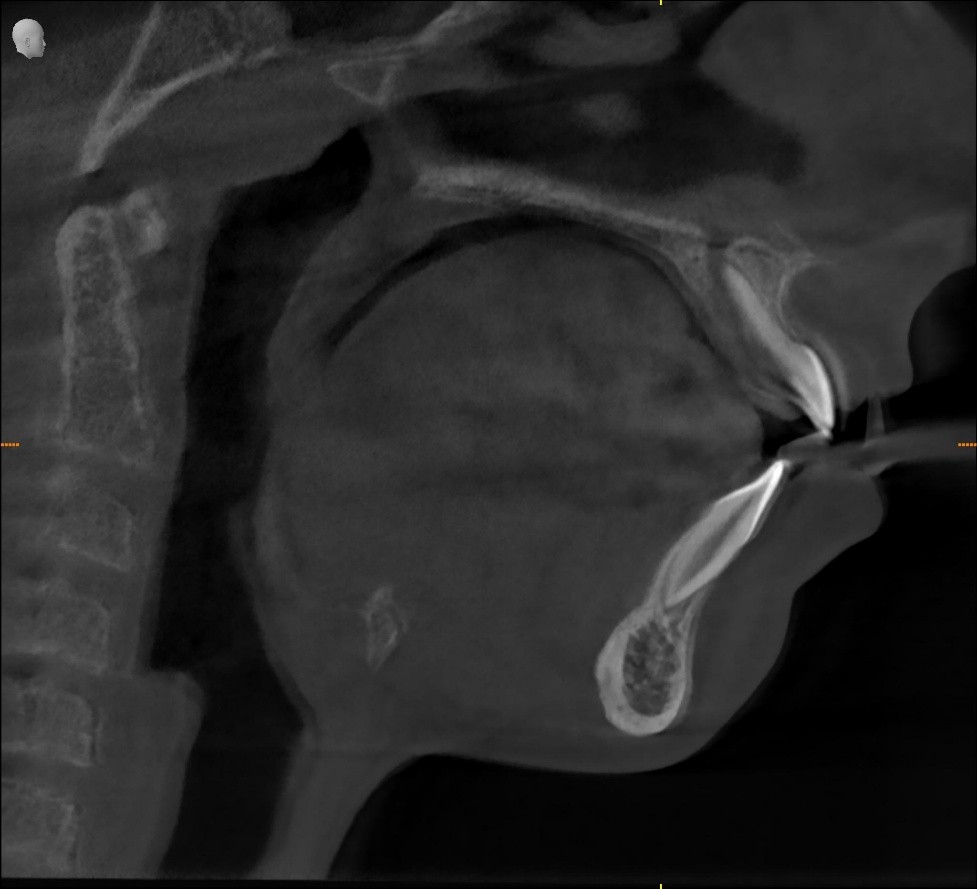
- Targeted radiographic analysis — only when it altered management
No assumptions.
No “wait and watch.”
The Diagnosis
Sourya was diagnosed with:
Pediatric airway dysfunction characterized by compromised nasal breathing, underdeveloped maxilla, altered tongue posture, and compensatory oral breathing
In simple terms:
His airway was restricting how his face, jaws, and body were growing.
Why Doing Nothing Is Not Neutral
Leaving airway issues untreated does not preserve normal growth.
It allows abnormal growth to become permanent.
Long-term consequences include:
- Altered facial development
- Severe orthodontic complexity later
- Sleep-disordered breathing and pediatric sleep apnea
- Behavioral and learning difficulties
- Reduced overall health and immunity
Early years are not a waiting phase —
they are a critical window.
Our Treatment Philosophy: Guide Growth, Don’t Chase Problems
We follow an early, non-invasive, growth-guided approach, designed to work with the child’s natural development.
Phase 1: Airway Expansion & Functional Correction
Creating space to breathe, grow, and develop
- Maxillary expansion to improve nasal airflow
- Functional appliances to guide jaw growth
- Training correct tongue posture and nasal breathing
Phase 2: Habit Re-education & Stabilization
Because structure alone is not enough
- Myofunctional therapy
- Breathing retraining
- Postural correction
Phase 3: Growth Monitoring & Prevention
Protecting the results long term
- Preventing relapse
- Reducing future orthodontic complexity
- Supporting optimal facial and airway development
The Outcome
With early airway-centered intervention, Sourya showed remarkable improvement:
- Nasal breathing established
- Snoring completely eliminated
- Improved sleep quality
- Better focus and academic performance
- Healthier facial growth pattern
- Reduced likelihood of complex orthodontic treatment later
Most importantly —
he began growing the way he was meant to.
A Message to Parents
If your child:
- Breathes through the mouth
- Snores at night
- Struggles to focus or learn
- Has early crowding of teeth
- Sleeps restlessly
👉 This is not normal
👉 This is not just a habit
👉 Early airway evaluation can change your child’s life
A Message to Pediatricians, ENTs & Educators
Airway dysfunction often presents as:
- Behavioral challenges
- Learning difficulties
- Growth concerns
- Recurrent ENT issues
Early dental airway evaluation can prevent years of medical, orthodontic, and psychological complications.
Interdisciplinary collaboration saves futures.
Final Thought
Airway dentistry is not cosmetic.
It is preventive pediatric healthcare.
When we intervene early, we protect:
- Sleep
- Growth
- Learning
- Facial development
- Long-term health
And most importantly —
we give children the chance to grow into their best possible version.