
How Early Orthodontic Intervention Helped a Child Sleep, Breathe, and Grow Better
When a Child’s Sleep Tells a Bigger Story
Patient Profile
Age: 10 years
Gender: Male
This young patient did not come to us because of crooked teeth.
He came because he couldn’t breathe properly — especially at night.
What appeared as snoring and mouth breathing was quietly affecting his sleep, energy levels, and daily performance.
Symptoms That Affected Everyday Life
For several years, the child experienced:
- Chronic mouth breathing
- Habitual snoring
- Disturbed and restless sleep
- Daytime fatigue
- Reduced attention span and focus
- Recurrent nasal congestion
These symptoms were not just “habits.”
They were signs of a compromised airway.
Medical & ENT History: Partial Relief, Persistent Problem
An ENT evaluation revealed moderate adenoid hypertrophy.
Medical management included:
- Nasal corticosteroid sprays
- Saline nasal irrigation
- Anti-allergic medications
While these measures provided temporary relief, they did not restore full nasal breathing.
Mouth breathing and snoring continued.
At this stage, no surgical intervention was planned, and the child was referred for orthodontic evaluation.
Clinical Examination: The Face Reflects the Airway
Extraoral Findings
- Long-face growth pattern
- Lip incompetence
- Dark circles under the eyes (adenoid facies)
- Forward head posture
Intraoral Findings
- Narrow, high-arched maxilla
- Posterior crossbite
- Crowding in mixed dentition
Functional Findings
- Persistent mouth breathing
- Low tongue posture
- Mandibular retrusion
These findings pointed toward a structural contribution to airway compromise.
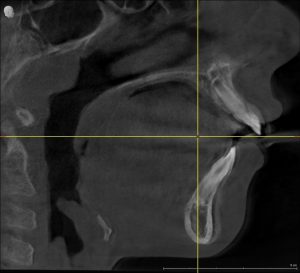
Diagnosis: More Than a Dental Problem
The child was diagnosed with:
- Upper airway constriction related to adenoid hypertrophy
- Maxillary transverse deficiency
- Mandibular retrusion
- Pediatric sleep-disordered breathing
This was not just an orthodontic issue — it was a growth, breathing, and sleep concern.
Treatment Goals: Treat the Airway, Not Just the Teeth
Our treatment objectives were clear:
- Improve upper airway volume
- Establish nasal breathing
- Correct maxillary constriction
- Advance the mandible
- Improve sleep quality and overall health
- Support healthy craniofacial growth
Treatment Plan: A Multidisciplinary, Airway-Focused Approach
The treatment plan included:
- Maxillary expansion to widen the nasal floor and improve airflow
- Mandibular advancement appliance to increase airway patency
- Myofunctional guidance to retrain tongue posture and breathing
- Continued ENT monitoring
The goal was functional correction, not cosmetic alignment.
Treatment Progress: Small Changes, Big Impact
- Maxillary expansion resulted in improved nasal airflow and reduced mouth breathing
- Mandibular advancement led to better airway patency, especially during sleep
Parents reported noticeable changes within months.
Results: A Child Who Could Finally Breathe and Sleep Well
Post-treatment outcomes included:
- Established nasal breathing
- Complete resolution of snoring
- Improved sleep quality
- Better daytime energy and concentration
- Healthier facial growth pattern
The transformation extended beyond the mouth — it changed the child’s daily life and development.
Why This Case Matters
Many children with mouth breathing and snoring are told they will “outgrow it.”
This case proves that early intervention can change the trajectory.
Airway-oriented orthodontics can:
- Reduce airway resistance
- Support ENT treatment
- Improve sleep quality
- Positively influence growth and behavior
Final Takeaway
Early breathing problems deserve early solutions.
When medical therapy alone is not enough, airway-focused orthodontic treatment can play a critical role in restoring normal breathing, healthy sleep, and optimal growth.
Treat the airway early — and you treat the child’s future.